
How do you organise a company annual general meeting? Steps and checklist
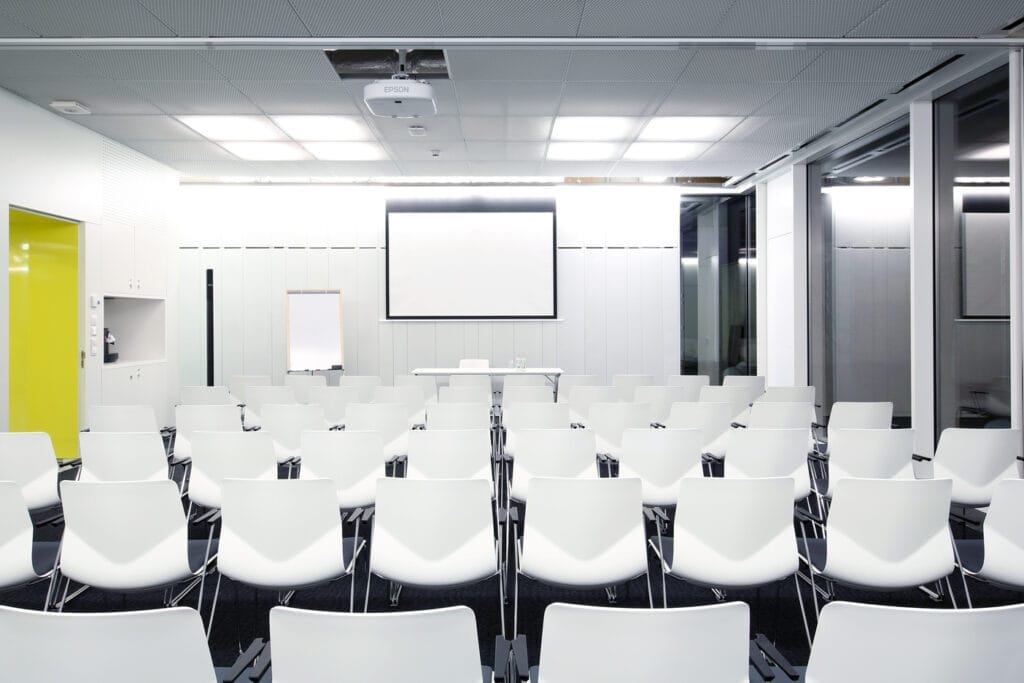
A general meeting is not quite like any other meeting. Behind what is sometimes a very formal agenda, important decisions are made: approval of the accounts, appointment of directors, voting on resolutions, and the presentation of the company’s results or future direction.
For the organiser, there are two key challenges. It is essential to adhere to the framework set out by the company whilst creating the necessary conditions to ensure that discussions, presentations and votes can take place in a clear and smooth manner.
From sending out invitations and preparing documents to choosing a venue, organising audiovisual equipment, welcoming participants and drawing up the minutes, it is therefore best to proceed methodically.
Here are the main steps for organising a company general meeting, accompanied by a practical checklist to ensure nothing is overlooked.
1. Start by clearly defining the scope of the general meeting
Before booking a venue or preparing presentations, set out the framework for the general meeting.
Is it an ordinary or extraordinary general meeting? How many people are likely to attend? Will any be represented by proxy? Are votes planned? Will any participants or speakers need to join remotely?
This initial overview of the event influences practically everything else: duration, room layout, audiovisual equipment, reception procedures and the organisation of voting.
It is also useful to appoint, at a very early stage, the people responsible for the various aspects of the meeting: general organisation, content, legal or statutory matters, technical arrangements and reception.
To be checked
- Nature and purpose of the meeting defined
- Date and times set
- Estimated number of participants known
- List of invited attendees drawn up
- Arrangements for participation and representation clarified
- Internal organisers identified
2. Check legal and statutory obligations
The general meeting has a legal dimension that must not be confused with its practical organisation alone.
The rules concerning, in particular, notice periods, those authorised to attend, proxies, quorum requirements, the required majorities and the drafting of the minutes may vary depending on the organisation’s legal form, its articles of association and the type of decision put to the vote.
Before sending out invitations, therefore, ensure that the process is approved by the relevant person within your organisation: the legal department, the general secretariat, the board of directors, a chartered accountant or an external adviser, depending on your organisation.
The timetable can be of particular practical importance. For Belgian companies required to file annual accounts, the National Bank of Belgium specifies that these must be submitted for approval by the general meeting within six months of the end of the financial year, then filed within 30 days of their approval and, at the latest, seven months after the end of the financial year. This requirement alone highlights the importance of setting the date for the AGM well in advance.
This advance planning then enables the events team to work on a clear basis, without having to alter the entire organisation just a few days before the AGM.
3. Draw up a realistic agenda
An AGM can quickly become packed with items. Several reports may need to be presented, followed by questions, debates and successive votes.
Draw up a sufficiently detailed schedule:
- opening of the meeting;
- checking attendance or proxies;
- presentation of the various items;
- statements by those in charge;
- question time;
- votes on resolutions;
- announcement or confirmation of results;
- closing of the meeting.
Allocate an indicative duration to each section and allow some leeway for discussion.
A more detailed schedule can then be prepared for those organising the event. It will specify not only the timetable but also the speakers, the presentations to be displayed, the microphones required and any changes to the layout.
This clarity is by no means incidental. In its Work Trend Index, Microsoft noted that 55 per cent of respondents felt that the next steps were unclear at the end of a meeting, whilst 56 per cent found it difficult to summarise what had taken place. At a general meeting, where every decision can lead to concrete actions, structuring the discussions and clearly summarising the decisions at the end of the session is therefore essential.
4. Choosing a suitable venue for the AGM
A meeting of 20 people and an AGM attended by several hundred participants obviously require different organisational arrangements.
Capacity is important, but it should not be your only criterion.
Also consider the layout of the room. A theatre-style layout is well suited to a meeting focused primarily on presentations, whilst a layout that allows for more interaction may be preferable when discussions play a significant role.
Also consider:
- visibility of the screen from across the room;
- acoustics;
- participant flow;
- the space required for reception and registration;
- the building’s accessibility;
- car park facilities and transport links;
- the spaces available for any breaks or receptions.
For a large meeting, having the venue, audiovisual equipment, catering and technical support all in one place greatly simplifies coordination.
Are you looking for a venue for your next general meeting? Discover BluePoint Liège’s event venues.
5. Prepare the documents well in advance
A general meeting often generates far more documents than a standard meeting.
Depending on its purpose, these may include reports, annual accounts, proposed resolutions, presentations, proxy forms, voting documents or appendices.
Centralise the final version of each file and clearly identify the person authorised to approve any changes.
Above all, avoid having multiple versions of the same presentation circulating right up until the day of the event.
For documents to be projected onto a screen, also ensure a backup version is available locally, even if they are normally accessible via the cloud.
6. Plan ahead for voting
When a meeting involves several resolutions, voting becomes a key part of the proceedings.
The following must be determined in advance:
- who is entitled to vote;
- how proxies are managed;
- which system will be used;
- how the results will be tallied;
- who will validate them;
- and how they will be communicated to the meeting.
The system chosen naturally depends on the number of people present and the rules applicable to the company.
A show of hands with just a few participants does not require the same infrastructure as a large meeting using an electronic system or involving remote participants.
In all cases, test the process before the doors open.
7. Ensuring the audiovisual equipment is in order
The AGM often involves several successive speakers: the chair, management, experts, board members or participants asking questions from the floor.
The sound must therefore remain perfectly clear.
Depending on the format, provide suitable microphones for the speakers as well as a solution enabling participants to speak without having to walk long distances or cause interruptions.
Also check:
- the computers used for presentations;
- connections to screens or projectors;
- any videos;
- the internet connection;
- remote presentations;
- charging or power supply for devices;
- back-up files;
- spare microphones and batteries.
A technical run-through before the audience arrives allows you to test the entire setup under real-world conditions.
This becomes even more important when part of the meeting takes place remotely. A Barco ClickShare study indicates that 71 per cent of employees surveyed found hybrid meetings stressful, whilst one in two experienced audio or video issues. This is yet another reason to test microphones, connections, screen sharing and remote participation in advance.
When there is a succession of presentations, speakers and votes, having on-site audiovisual support also offers a significant advantage: a single team is familiar with both the event’s programme and the technical infrastructure.
Does your meeting involve several presentations or remote participants? Discover the audiovisual solutions available at BluePoint Liège.
8. Organising the reception area and checking attendance
The reception area at a general meeting can serve a more important purpose than simply checking people in.
Depending on the context of the general meeting, it may be necessary to identify participants, record their attendance, verify certain proxies or hand out specific documents.
You should therefore set up the reception area according to the number of people expected.
For a large meeting, several queues may be set up: for example, in alphabetical order, by participant category or for pre-registration.
Signage should also enable everyone to quickly find the entrance, the reception area and then the meeting room.
Above all, a smooth check-in process prevents the official opening of the meeting from being delayed because several dozen participants are still waiting to register.
9. Plan breaks and refreshments without disrupting the flow
For a short AGM, a welcome coffee may suffice. As soon as the event lasts half a day or longer, refreshments should be included in the schedule.
Coffee breaks, lunch or a drinks reception after the session can also lend a more convivial atmosphere to what is otherwise a very formal gathering.
The right format depends above all on the programme.
A break that is too short for the number of people present creates queues. Conversely, a break that is too long can disrupt the flow of an already packed meeting.
When the venue and catering are coordinated by the same provider, service times can be more easily aligned with the actual progress of the meeting.
10. Preparing for after the meeting
The event does not necessarily end when participants leave the room.
In particular, the minutes and any documents relating to the decisions taken still need to be finalised, in accordance with your organisation’s procedures.
From an event management perspective, you should also take this opportunity to hold a quick debrief.
What went well? Was the reception area large enough? Were the speaking times realistic? Was the voting system suitable? Could certain technical issues be avoided at the next meeting?
As AGMs are often held on a regular basis, a few notes taken immediately after the event can save a great deal of time the following year.
Checklist: organising a company general meeting
In the run-up
- Define the type and objectives of the general meeting
- Set the date and times
- Check legal and statutory requirements
- Draw up the list of attendees
- Prepare and send out notices of meeting
- Determine the proxy voting arrangements
- Book a suitable venue
- Define the room layout
- Prepare the agenda
- Identify the resolutions to be put to the vote
- Prepare the necessary documents
- Define the voting procedure
- Organise reception and attendance checks
- Arrange for audiovisual equipment
- Arrange breaks and catering
- Provide practical information to participants
A few days beforehand
- Confirm the number of participants
- Check the proxies received
- Approve the final versions of the presentations
- Finalise the running order
- Test the audiovisual equipment
- Test the voting system
- Prepare the attendance lists
- Check the signage
- Brief the reception and technical teams
- Make a backup copy of essential documents
On the day
- Set up and test the venue before participants arrive
- Check microphones, projectors and connections
- Open the reception area early enough
- Record attendance
- Check the latest proxies
- Follow the meeting agenda
- Keep a clear record of the voting results
- Identify the decisions and actions to be included in the minutes
Above all, a well-organised AGM should allow participants to focus on the decisions
The success of a general meeting often depends on participants not noticing all the logistics taking place behind the scenes.
They find the venue easily, are welcomed promptly, can hear the speakers clearly, understand what is being presented and can take part in votes without hesitation.
For the organiser, this smooth running relies on a simple combination: structured preparation, a realistic programme and facilities suited to the number of participants and the format of the meeting.
BluePoint Liège offers flexible event spaces as well as on-site audiovisual and catering solutions, enabling several aspects of organising a corporate meeting to be centralised.
Are you planning your next general meeting in Liège? Present your project to the BluePoint Liège team and request a tailored proposal.
Would you like to discover all that BluePoint Liège has to offer?
