
Why some corporate events leave a lasting impression… while others are forgotten immediately
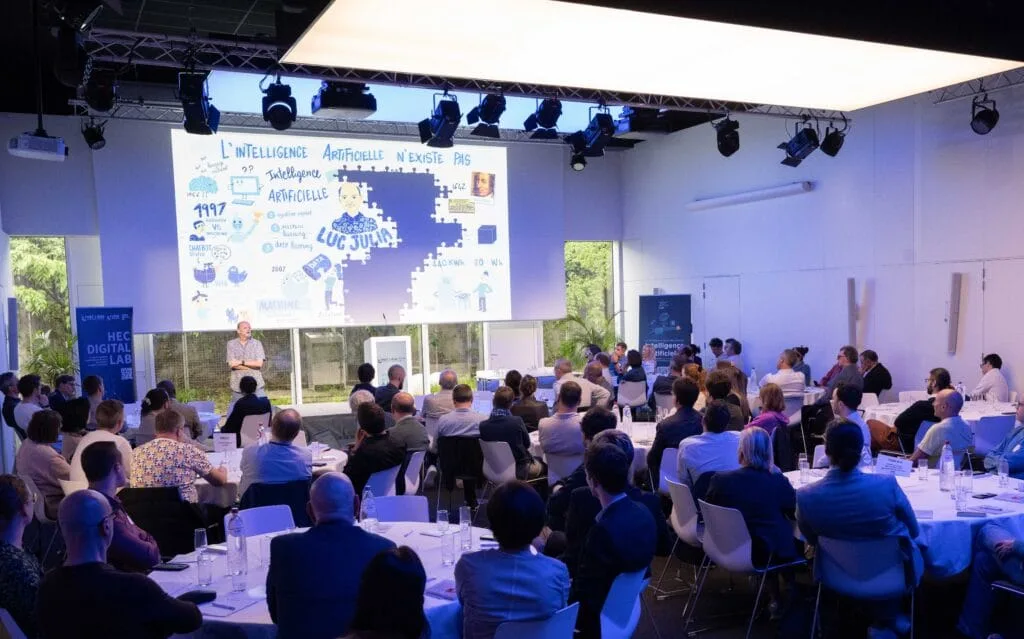
What participants take away from an event is almost never what the organizers had originally planned. They don’t necessarily remember the number of slides in a presentation, or even the exact sequence of the agenda. Instead, they clearly remember the overall energy, the smoothness of the experience, the quality of the discussions, the networking opportunities, the pace of the day, and the feeling of having been part of something truly meaningful. And that is precisely where the event planner’s role becomes crucial.
Today, organizing a corporate event is no longer simply a matter of booking a venue and coordinating a few vendors. Expectations have changed dramatically. Companies want events that can foster engagement, strengthen their brand image, connect participants, convey a clear message, and generate a real business impact.
In this context, the modern event planner has become a true orchestrator of the experience.
Whether working in-house or at an agency, their role goes far beyond logistics. They must anticipate risks, simplify complexity, coordinate technology, manage people flow, and transform a business objective into a cohesive and memorable experience.
Why corporate events have become much more complex
Corporate events have evolved significantly in recent years.
Conferences, kick-offs, general meetings, client events, product launches, internal seminars, or hybrid formats: the expected standards are now much higher than before.
Several factors explain this evolution.
First, participants have become much more demanding. Accustomed to seamless and personalized digital experiences in their daily lives, they now expect the same level of quality at professional events. Poor acoustics, a poorly planned schedule, disappointing catering, or endless transitions now have an immediate impact on the overall perception of the event.
Second, the formats themselves have become more complex. Many events must now incorporate:
- hybrid components,
- streaming,
- video recordings,
- multiple simultaneous spaces,
- breakout sessions,
- interactive experiences,
- and even stricter CSR and ESG requirements.
Finally, companies now expect concrete results. An event must serve specific objectives:
- strengthen corporate culture,
- facilitate networking,
- support business development,
- build customer loyalty,
- improve employee engagement,
- or enhance brand image.
In this context, there is no room for improvisation.
Today, participants view an event as a complete experience
For a long time, organizers focused their attention on the content of the event itself: the speakers, the presentations, or the program.
Today, participants evaluate an event as a whole.
The experience begins long before the first session:
- the venue’s accessibility,
- the smoothness of check-in,
- wayfinding,
- the atmosphere of the spaces,
- the ease of networking,
- the quality of breaks,
- lighting,
- comfort,
- noise levels,
- movement between rooms,
- technical quality.
All these elements directly influence:
- attention,
- energy,
- retention,
- and the professional perception of the event.
A participant who has to search for their way for ten minutes, wait in line at the catering area, or endure poor audio quality quickly loses their level of engagement.
Conversely, a seamless experience gives the impression that “everything flows naturally.” And this fluidity is rarely a matter of chance.
The best event planners meticulously work on these invisible details.
They consider the rhythm of the day, the timing of networking breaks, the dynamics of transitions, crowd flow management, and even participants’ cognitive fatigue.
This is also why venue selection has become much more strategic than before.
Venues designed for B2B events—with modular spaces, integrated technical infrastructure, and multiple possible layouts—allow planners to create more cohesive and far more comfortable experiences for attendees.
BluePoint Liège fits perfectly into this approach with a “one-stop-shop” model designed to simplify the organization of professional events: operational assistance, technical support, flexible spaces, and infrastructure suited to corporate events of various sizes.
The modern event planner: strategist, coordinator, and experience creator
The role of the event planner has changed profoundly.
Once seen as primarily a logistical role, it is now much more cross-functional and strategic.
A good planner must now understand:
- business objectives,
- communication challenges,
- participant expectations,
- technical constraints,
- the user experience,
- and sometimes even HR or marketing issues related to the event.
They become an intermediary between several realities:
- the company’s ambitions,
- operational constraints,
- the audience’s expectations,
- and the venue’s practical capabilities.
Their role involves, in particular:
- developing a reverse schedule,
- coordinating vendors,
- managing unforeseen issues,
- anticipating risks,
- streamlining the participant experience,
- overseeing technical aspects,
- and maintaining overall consistency from start to finish.
But what truly sets the best event planners apart is their ability to anticipate.
They identify potential friction points before they arise:
- poorly planned traffic flow,
- overly tight timing,
- a lack of breaks,
- a potential technical issue,
- or an unsuitable room layout.
Their job often involves solving problems… before they even exist.
Why companies now expect a real ROI from their events
The success of an event is no longer measured solely by the number of attendees.
Today, companies want to understand the real impact of their event investments.
A corporate event can now serve several strategic objectives:
- strengthening team engagement,
- supporting employer branding,
- building customer loyalty,
- generating leads,
- creating business opportunities,
- accelerating partnerships,
- or boosting brand visibility.
This shift is profoundly changing the way events are designed.
The experience itself has become a business tool in its own right.
This explains why planners today pay so much attention to:
- the quality of networking,
- participant flow,
- informal spaces,
- comfort,
- the overall energy,
- and the experience beyond mere content.
The most effective events are rarely the most “spectacular.” They are often the ones that foster the best human interactions.
This is also why hybrid and multifunctional spaces are gaining importance. Companies are looking for venues capable of hosting:
- conferences,
- workshops,
- networking,
- catering,
- demonstrations,
- or more informal gatherings within a cohesive environment.
What the Best Event Planners Do Differently
One of the key differences between a “decent” event and a truly successful one lies in the invisible details.
Experienced planners know that participants’ attention spans fluctuate constantly.
So they consider:
- varying formats,
- the energy of each segment,
- the length of presentations,
- breathing room,
- interactions,
- and the quality of transitions.
They also understand that spaces strongly influence behavior.
A rooftop fosters more natural exchanges.
Open spaces further stimulate networking.
Good acoustics immediately improve attention.
Natural light reduces cognitive fatigue.
This approach explains why many planners now favor venues capable of offering multiple atmospheres within a single event.
Today’s most effective event venues are no longer just “rooms.” They are becoming true tools for designing the experience.
The modern event planner must also become a technological conductor
Technology has become indispensable in B2B events.
Streaming, hybrid formats, video recording, multi-screen broadcasting, LED walls, microphones, lighting design, network connectivity, audiovisual integration… the technical aspect is now present in almost all professional events.
But paradoxically, the best technology is often the one you don’t notice.
When the technology works perfectly:
- speakers stay focused,
- participants stay engaged,
- and the experience feels seamless and natural.
Conversely, an audio issue or a poorly managed setup change can quickly undermine the overall perception of the event.
That’s why planners are increasingly looking for venues that offer:
- in-house technical teams,
- integrated AV infrastructure,
- responsive support,
- and genuine event expertise.
The benefit isn’t just technical. It’s also operational.
Reducing the number of intermediaries saves time, minimizes risks, and greatly streamlines the organization.
Would you like to discover all that BluePoint Liège has to offer?