
LED Screen vs Video Projection: Which Is Best for Your Event?
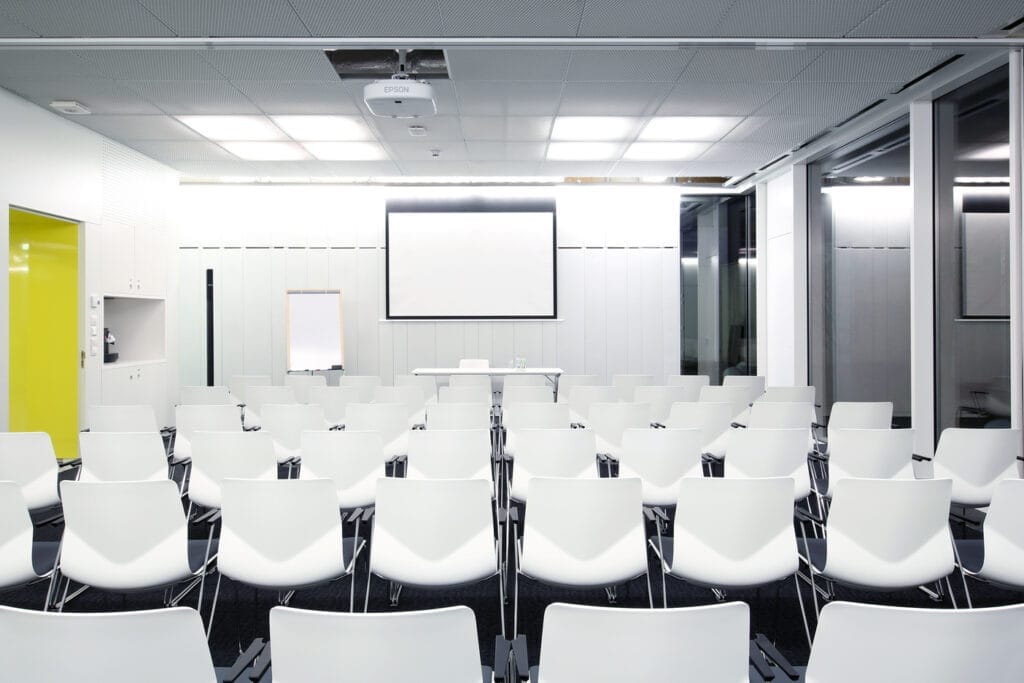
LED screen or video projection: the right choice depends on the room’s lighting, audience viewing distance, displayed content and technical budget. For a congress, seminar or conference, compare both solutions against the real conditions of your event rather than their advertised performance alone.
Two technologies, two approaches to display
An LED wall generates its own light directly through modules assembled into a display surface. A video projector sends an image onto a screen that reflects light. This difference explains much of their performance: LED generally retains contrast more effectively in lit environments, while projection benefits from spaces where lighting can be controlled.
Neither is a universal winner. A PowerPoint presentation in a meeting room, a filmed keynote and a gala evening do not require the same image size, staging or technical complexity.
1. Brightness: the first criterion to assess
In a bright room, an LED screen is often easier to read because light comes from the display itself. Video projection must compete with ambient light reflected by the screen, which can wash out colours and blacks. The ability to close blinds, dim lighting or keep stage lights away from the projection surface can therefore determine the choice.
For a useful benchmark, Epson Europe indicates that projectors above 3,500 lumens suit demanding bright environments, although this threshold alone does not guarantee an adequate result for a large event. Image size, distance, screen surface and lighting must be assessed together.
Best practice
Ask for a readability assessment at the brightest point in your programme, not just during a test in a darkened room.
2. Image size, throw distance and visibility
Video projection is especially attractive for creating a large image at a controlled cost, provided there is enough throw distance and no obstacles in the beam. Short-throw lenses can reduce certain depth constraints, but projector placement remains critical.
An LED wall is assembled from modules and can form an almost seamless stage backdrop. In return, its weight, supporting structure, power supply and technical access need planning. Image detail depends on the pixel pitch, meaning the distance between pixels: the closer the audience, the more important this specification becomes.
For example, a P2.5 pitch means 2.5 mm between pixels, while P3.9 means 3.9 mm. These figures describe pixel density, not a universal minimum viewing distance. For detailed content, request a simulation from the front rows.
3. What content will you display?
Content type matters just as much as technology. For simple slides, charts and standard presentations, appropriately specified video projection can work perfectly well. For immersive branding, frequent video sequences, animated brand visuals or a permanent digital backdrop, an LED wall offers greater staging flexibility.
- Check the actual readability of text, figures and tables from the back row.
- Choose an aspect ratio that matches your content: 16:9, panoramic or custom dimensions.
- Test videos, transitions, HDMI connections and laptop handovers before attendees arrive.
- If the event is filmed, work with the video crew to check for flicker, moiré or overexposure on an LED wall.
A large screen fed with unsuitable visuals may be less effective than a simpler system that has been properly prepared.
4. Installation, safety and venue constraints
The cost of an audiovisual solution goes beyond equipment rental. LED walls often require a supporting structure, installation crew, suitable power distribution and configuration time. Projection needs a stable projector position, a screen, sometimes suspension equipment, and a clear path for the light beam.
In both cases, have load capacities, rigging points, cables, emergency exits and setup and dismantling times checked. The technical control team must be able to intervene quickly if a fault occurs.
To account for these requirements from the booking stage, explore BluePoint Liège’s event spaces and compare your audiovisual setup with the room layout.
5. Which budget should you actually compare?
LED usually involves a higher investment for comparable dimensions, particularly when structures, transport and assembly are included. Projection can be more economical for a conventional presentation or a very large image in controlled lighting. However, a high-output projector, multiple screens or a complex setup can narrow the difference.
Request two quotations covering an identical scope: image size, expected brightness, technicians, structures, technical control, cabling, rehearsal and any backup system. Equipment price alone is not a reliable comparison.
6. Which option suits which event?
- Meeting or training: prioritise document readability and easy connectivity. Projection is often sufficient if lighting is controlled.
- Conference or congress: assess stage lighting, room depth, relay screens and filming. Both LED and projection may be suitable.
- Product launch: LED is particularly valuable when the display forms an integral part of the staging.
- Gala dinner or awards ceremony: decide based on sightlines from the tables, lighting effects and integration with the stage.
- Hybrid event: add a complete test with cameras and the broadcast control team, whichever technology you choose.
A combined solution can also work well: a central stage display with secondary screens serving specific areas. Avoid multiplying screens without a clearly defined visibility objective.
The checklist before you decide
- What is the actual light level during each part of the programme?
- What image width ensures readability from the back of the room?
- What throw distance, rigging points and electrical capacity are available?
- Are the visuals designed for the display’s resolution and aspect ratio?
- What is the complete cost, including installation and technical support?
- Who signs off on testing with the control team, speakers and cameras?
For smaller formats, also explore BluePoint Liège’s meeting rooms to identify a setup that suits your participant numbers.
Make the right choice through thorough technical planning
An LED screen is not automatically better than video projection, and projection is not limited to small events. Light, viewing distances, content and technical operation determine the right answer. Defining these criteria from the initial brief improves readability, makes production more reliable and helps control costs.
Would you like to discover all that BluePoint Liège has to offer?
