
The ultimate checklist for a September workshop that really brings your teams back on track
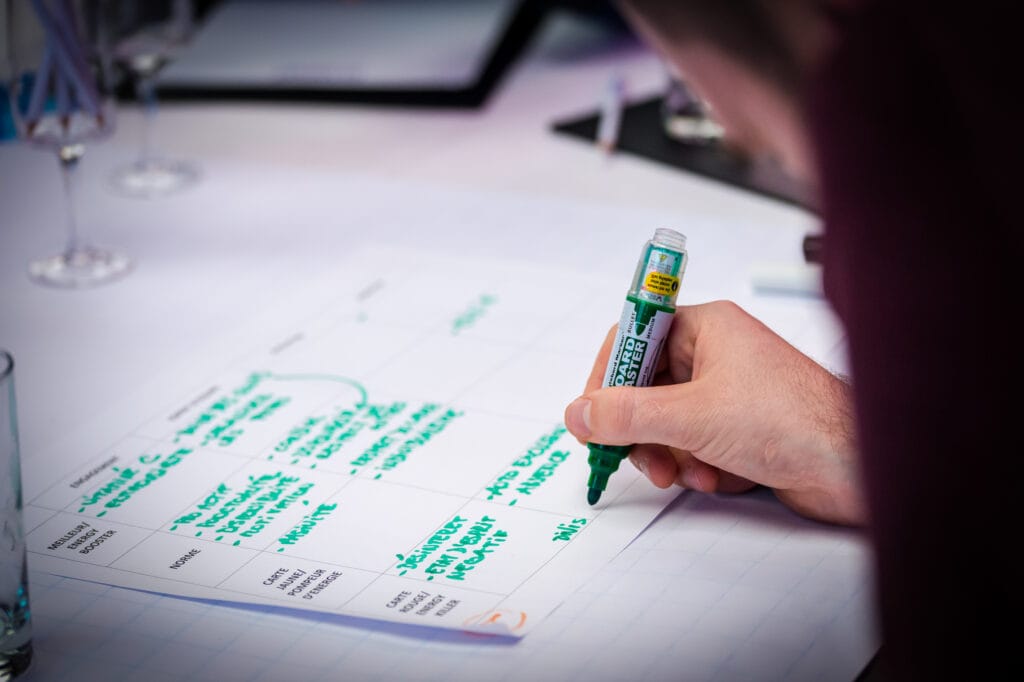
Organising a back-to-work seminar in September requires meticulous preparation. Your teams return to the office with a clear head, but the crucial objectives for the final quarter demand immediate refocusing. This strategic gathering leaves no room for logistical hiccups, as even the slightest disruption risks losing the team’s extremely fleeting attention. Here is the comprehensive roadmap for structuring this decisive day and turning that autumnal momentum into tangible results.
The anatomy of an invitation that drives engagement
The success of your kick-off event begins well before the big day. The most common mistake is to send a simple calendar invitation entitled ‘Back-to-work seminar’, accompanied by a dry agenda as an attachment. This administrative approach stifles enthusiasm the moment the email is opened. Your staff need to understand immediately the added value of their attendance and what’s at stake on the day.
Successful pre-event communication must build positive anticipation. Set up a phased communication schedule:
- Send a “Save-the-Date” 45 days in advance, revealing only the central theme to pique curiosity.
- Consult your teams via a short survey (three questions maximum) to identify the practical challenges they’d like to see addressed.
- Send out the full logistical briefing just five days before the event, including precise timings and a detailed map.
Easing the mental strain of the morning commute
Put yourself in your employee’s shoes for a moment on the morning of the seminar. They’re navigating often heavy traffic and frantically searching for a parking space. If they arrive at the venue fifteen minutes late, sweating and rather annoyed, it will take them a full hour to regain their concentration. The effectiveness of your morning has already been compromised.
The choice of location acts as a powerful stress-relief filter. The venue’s facilities must handle all the logistics so that guests simply have to sit back and relax. A venue strategically located in the Vennes district, offering a private underground car park equipped with charging points as well as easy access from Guillemins station, guarantees your guests a stress-free start. Arriving feeling relaxed means you’re already ready to engage with the content.
Spatial ergonomics to break down passivity
For decades, the corporate world has replicated academic conventions: a speaker on a podium, facing rows of perfectly aligned chairs. This format sends a clear message to the brain: remain silent and passively receive the flow of information. To stimulate collective intelligence and encourage participation, the space must be tailored to the session’s objective.
Modularity is the cornerstone of a modern gathering. A morning dedicated to top-down announcements requires absolute visual comfort. The afternoon, devoted to brainstorming workshops, calls for spaces that foster the flow of ideas. Don’t hesitate to opt for event spaces bathed in natural light, fitted with genuinely ergonomic furniture, to prevent physical and mental fatigue.
Managing the body’s natural rhythm through catering
The organiser’s worst enemy strikes without fail around two o’clock. It is the infamous post-lunch slump. Eyelids grow heavy and the speaker suddenly feels as though they are addressing a room of people who have been put under anaesthetic. This phenomenon is purely a biological process triggered by unsuitable food, often overloaded with fast-acting carbohydrates and heavy sauces.
Event catering should not merely please the palate; it must act as intellectual fuel. Insist on fresh produce, light proteins and tasty vegetarian alternatives. To avoid the pitfall of a heavy meal, the ideal solution is to work with a venue that offers high-quality catering from its own restaurant, such as Le Cabochon, which is able to adapt seamlessly to your guests’ various dietary restrictions.
Technological invisibility as the absolute standard
Nothing undermines a leader’s authority on stage more quickly than a technical glitch. A video that freezes, shrill feedback just as someone is about to speak, or a remote participant whose voice can only be heard in snatches: these incidents disrupt the flow of the day. Technology must not be a cause for concern; it must operate in the background, powerful yet undetectable.
The art of choreographing breathing space
In the obsession with making the most of every minute of the day, there is a strong temptation to string presentations together without giving the audience a moment’s respite. This is a fatal strategic error. The human brain needs time to process complex information.
The most fruitful moments of a corporate event very rarely take place on the main stage. Cross-departmental conflicts are resolved and flashes of innovation emerge during breaks. These gaps in your schedule must be fiercely defended. Get participants out of the main hall; prioritise venues with direct access to the outdoors so they can clear their heads and take in a different view before getting back to work.
The need for environmental consistency
Your staff, just like your clients, have become highly adept at spotting inconsistencies. Promises of sustainability proclaimed on stage ring incredibly hollow if the event itself generates a massive amount of waste. Corporate social responsibility (CSR) is first and foremost embodied in the exemplary nature of the event’s practical organisation.
Choosing a logistics partner aligned with these values allows you to demonstrate your commitment through tangible actions. Assess the venue’s waste management, energy policy and the provenance of the food served. Demand concrete evidence of these commitments, for example by consulting a downloadable brochure detailing the official certifications held by the venue.
Turning momentum into a concrete action plan
An event that ends with a simple “thank you for coming” leaves an unpleasant sense of incompleteness. The close of the day must act as a direct springboard into day-to-day operations. The energy built up throughout the seminar must be immediately channelled into concrete and measurable actions.
In the final half-hour, summarise the day’s three key decisions. Publicly assign responsibilities and announce the follow-up: when will the summaries be shared? By what date must the working groups formed that day submit their initial conclusions? The success of your September seminar is not measured by the volume of applause at the end of the day, but by the speed at which your teams take action the following Monday.
So, to secure the dates for your next event with confidence and refine your requirements in consultation with experts, please let us know your ambitions via our contact form.
Would you like to discover all that BluePoint Liège has to offer?
