
6 Key Reasons to Incorporate Live Events into Your Marketing Strategy
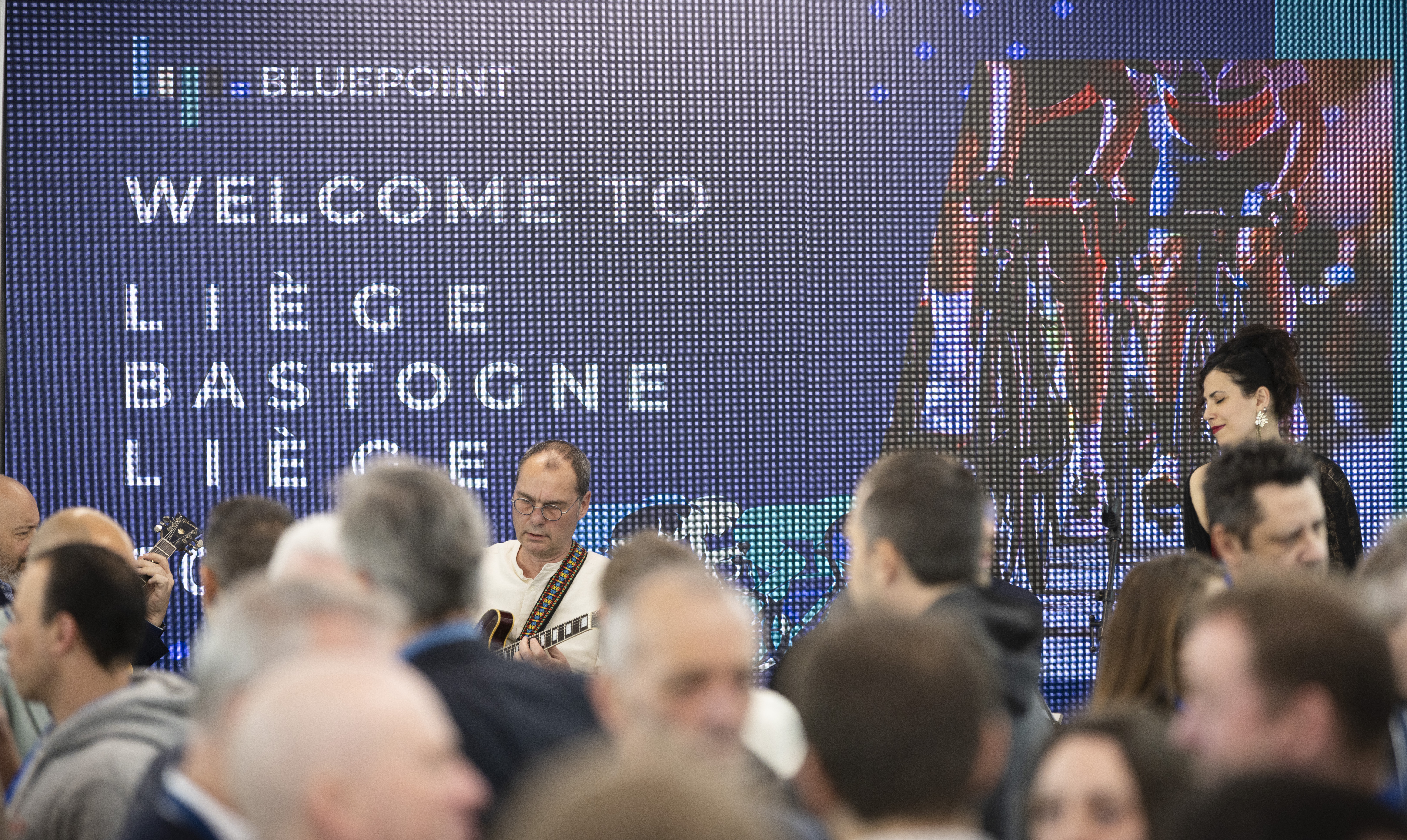
The return to in-person interactions is no coincidence; it is, above all, a response to market saturation. For years, marketing strategies were built around a simple premise: more digital = better performance. Automation, multichannel campaigns, scalable content… everything seemed to indicate that growth would come from optimizing digital channels. Then a shift took place.
According to several industry studies (notably those by Bizzabo and Forrester), more than 70% of B2B decision-makers now consider in-person events to be their most impactful marketing channel in terms of ROI, ahead of content marketing or paid advertising campaigns.
Why? Because digital marketing has reached a critical saturation point:
- declining open rates
- fragmented engagement
- volatile attention
In this context, in-person events aren’t making a comeback as a mere add-on. They’re returning as a structural solution to a marketing effectiveness problem.
And above all, they address a deeply human need: the need to reconnect.
Why?
1. Because trust can’t be downloaded
Most B2B journeys have become complex, lengthy, and multi-stakeholder. But one constant remains: a strategic decision always relies, at some point, on a high level of trust.
However, this trust is not built solely through content or calls. It is built through real interaction.
A live event enables what digital cannot replicate:
- the spontaneity of exchanges
- the richness of non-verbal communication
- the quality of attention
This is precisely what the data shows: face-to-face interactions significantly increase conversion rates in complex sales cycles.
In this context, the event becomes a trust accelerator. And thus, indirectly, a business accelerator.
2. Because attention has become your scarcest resource
Today, capturing attention is harder than producing content.
A B2B decision-maker is exposed to hundreds of solicitations per week. In this environment, even the best campaigns struggle to stand out. A physical event radically changes the game. You no longer fight for a few seconds of attention.
You benefit from several hours, sometimes an entire day, in a dedicated environment. This difference in scale makes all the difference.
It allows you to:
- drive a message home
- tell a complete story
- create a cohesive experience
The most successful companies no longer settle for simply communicating. They orchestrate moments.
And that is exactly what a well-designed event enables—backed by infrastructure capable of transforming content into an immersive experience (set design, projection, staging…).
3. Because the experience leaves a stronger impression than the message
No matter how well-crafted it may be, content is inevitably forgotten. A memorable experience stays with people longer.
It’s a well-documented principle in neuroscience: emotion enhances memory retention. Live events simultaneously activate several emotional triggers:
- social interaction
- sensory immersion
- active engagement
Result: a much stronger cognitive imprint.
This is also why brands invest in experiential formats:
- scripted product launches
- immersive conferences
- augmented hybrid events
The message is no longer simply conveyed. It is experienced. And this nuance changes everything in terms of brand perception.
4. Because not all leads are created equal
Digital marketing has long been optimized around volume. More leads, more data, more automation. But this approach has reached its limits.
Today, the priority is no longer quantity, but the quality and maturity of opportunities. Live events offer precisely that.
Participants:
- have made the effort to attend
- have a clear interest
- are available to engage
According to several benchmarks, leads generated at events have significantly higher conversion rates than traditional inbound leads.
Better yet: they enable direct, frictionless, unfiltered conversations.
In a B2B context, this is a decisive advantage.
5. Because your positioning is also shaped by the setting
A brand doesn’t express itself solely through its messages. It also expresses itself through the contexts in which it operates. Organizing an event means making choices:
- a venue
- a setting
- an experience
And each of these choices sends a signal. A professional, technologically advanced environment designed for interaction immediately strengthens your credibility.
Conversely, an ill-suited setting can dilute your message or even damage your image.
This is where the role of the venue becomes strategic. Spaces designed for B2B events, with an integrated approach (technology, support, modularity), allow you to perfectly align substance and form.
In a region like Liège, where the industrial landscape is highly diversified and reflects sometimes very different needs, relying on a venue capable of structuring this bespoke experience becomes a true differentiator.
6. Because events create ecosystems, not just audiences
One of the major blind spots of digital marketing is its difficulty in creating collective dynamics. Events, on the other hand, work differently.
They bring together:
- customers
- prospects
- partners
- experts
And above all, they create cross-interactions.
These are no longer just exchanges between your brand and your audience. They are connections between players within the same ecosystem.
This is where the value explodes:
- indirect opportunities
- unexpected collaborations
- network effects
Some companies, in fact, use their events as true relationship-building platforms, far beyond any immediate marketing objective.
The real challenge: shifting from a communication-driven approach to an experience-driven approach
What the resurgence of live events reveals is not merely a change in channel. It is a paradigm shift.
We are shifting:
- from a broadcast-based approach
- to an engagement-based approach
- from a content-based approach
- to an experience-based approach
In this context, events are no longer one-off actions. They become strategic assets in your marketing mix.
Conclusion: what if your live moments became your best medium?
The companies that are succeeding today are not the ones that communicate the most. They are the ones that create the most memorable experiences.
In a saturated environment, attention is no longer captured. It must be earned.
And live events offer precisely that:
- time
- presence
- intensity
Integrating events into your marketing strategy isn’t a step backward.
On the contrary, it’s a step toward a more mature, more human, and more effective approach.
Want to discover everything BluePoint has to offer?
