
Walking Dinner: How to Plan a Corporate Menu That Encourages Networking
A corporate walking dinner needs to achieve two things at once: provide a satisfying meal and create opportunities for guests to connect. Menu quality alone is not enough. Bite sizes, service timing, station locations and dietary requirements directly affect how freely guests can move around. Here is how to design a catering format that supports professional conversations, controls quantities and prevents queues.
A meal designed to create connections
A walking dinner is neither a miniature buffet nor a drinks reception extended with a few canapés. It replaces a full meal while allowing guests to move around, meet different people and continue professional conversations. Its success depends on three decisions made together: food that is easy to eat standing up, well-paced service and a space designed for meeting people. An excellent dish served at the wrong time or in an awkward container can interrupt a conversation instead of encouraging it.
1. Start with the networking objective
Define who should meet whom: employees from different departments, clients and partners, conference participants or prospects at a launch. A customer-retention evening needs a different pace from a prospecting reception. Set aside time for guests to talk without announcements, performances or queues. A short address can open the evening, but it should not repeatedly interrupt service.
The format also differs from a seated dinner: without assigned seats, groups can change more naturally, whereas table service supports longer conversations with the same neighbours. Compare event catering formats before deciding.
2. Design food that is easy to eat
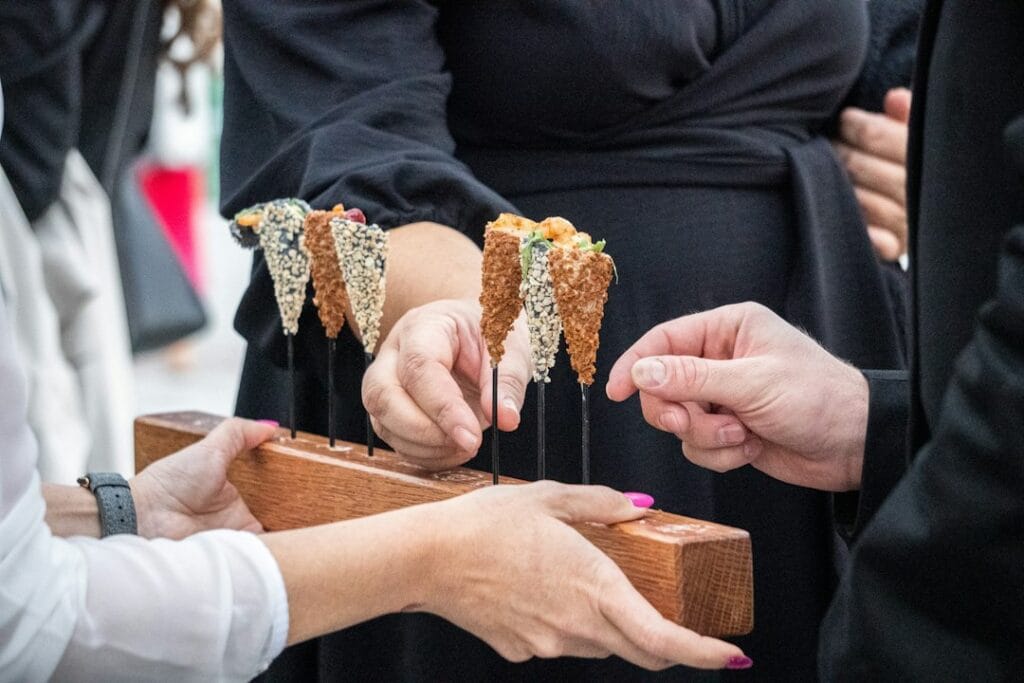
The practical rule is straightforward: food should be manageable with one hand, ideally in one or two bites, without cutting or sauces likely to spill. Choose stable containers, controlled serving temperatures and food that retains its texture while trays circulate. Compact skewers, miniature tarts, vegetable-based bites and thoughtfully prepared small glasses work better than dishes requiring a knife, table and prolonged attention.
The menu still needs to satisfy guests: alternate fresh bites, more substantial items, hot dishes and dessert. Avoid serving only light preparations if the reception replaces dinner. Agree the number of serving rounds and total quantities with the caterer based on duration, timing and guest profiles.
3. Build a service schedule around conversations
For a two- to three-hour reception, plan a clear progression: welcome drinks and first bites, more substantial courses, then desserts and coffee. This is an organizational example, not a mandatory duration. Serving hot items in regular rounds is often more effective than concentrating most food within a short window. Guests arriving later should still have a coherent food offering.
- At the start: quick tray service so guests do not converge on one point.
- In the middle: more substantial courses across several areas, without interrupting discussions.
- Towards the end: light desserts, hot drinks and a gradual move back to a convivial gathering area.
Ask for an operational service schedule specifying the type of food, planned quantity, location and person responsible for each round. It should also cover replenishment, collection of used tableware and adjustments based on actual attendance.
4. Spread service points without creating bottlenecks
A walking dinner misses its purpose if participants spend the evening standing in queues. Distribute food stations, the bar and dish-return points instead of placing everything near the entrance. Provide standing tables in several locations and enough seating for guests who cannot remain on their feet for long periods. Maintain accessible routes, clear circulation paths and discreet signage.
Staff carrying trays can reach guests already in conversation, while food stations create spontaneous meeting points. The balance between the two depends on floor area, guest numbers and the amount of live cooking. Explore BluePoint Liège’s event spaces and prepare a layout suited to your reception.
5. Include dietary needs and allergens from the brief
Collect vegetarian, vegan and other relevant dietary requirements during registration without requesting unnecessary medical information. Provide choices that add up to a complete meal rather than a token alternative. Check preparation and serving procedures to limit errors and cross-contact.
Regulations require reliable information about 14 allergen categories when present in food, including non-prepacked preparations. In Belgium, this information can be provided orally or in writing under specific conditions: staff must be able to give reliable answers. Read the Belgian public health guidance.
6. Adjust quantities, drinks and budget
Estimate quantities from confirmed attendance, the role of the meal in the programme and the planned schedule. A format replacing dinner requires more food than a welcome reception. Agree a reasonable buffer with the caterer, but avoid automatic overproduction. Track quantities during service and compare them with leftovers to improve the next event.
According to Eurostat, the European Union generated approximately 129 kg of food waste per inhabitant in 2024, with 12% coming from restaurants and food services. These figures cover the wider food system, not walking dinners specifically; they nevertheless highlight the importance of managing quantities and surplus food. Read the Eurostat data.
For drinks, spread out water points and alcohol-free alternatives, plan replenishment and prevent the bar from blocking circulation. Compare quotes on total cost: food, beverages, staff, service equipment, setup, logistics and waste handling.
7. Brief teams and assess the experience
Before doors open, hold a joint briefing with the event manager, caterer, reception team and technicians. Confirm service times, where special dietary options will be available, allergen procedures and who can make operational decisions. Establish a clear response if a service point becomes congested or an item runs short.
After the event, assess circulation, observed waiting times, most popular dishes, leftovers and the quality of professional exchanges. A short questionnaire can ask whether participants met relevant new contacts. This feedback is more useful than a food satisfaction score alone.
Turn the walking dinner into a genuine networking experience
The ideal menu is not about multiplying spectacular creations. It gives guests the freedom to enjoy a satisfying meal while remaining available for conversation. Manageable portions, inclusive food choices, progressive service and a fluid layout create the conditions for meaningful connections. Success depends on coordination between the event manager, caterer and venue well before the first guest arrives.
For your next customer reception, partner evening or networking event, first define the connections you want to encourage, then design the menu and room layout around that objective. Contact BluePoint Liège to create a professional walking dinner where food service genuinely supports conversation.