
Guide: How to make a corporate event memorable without overloading the agenda
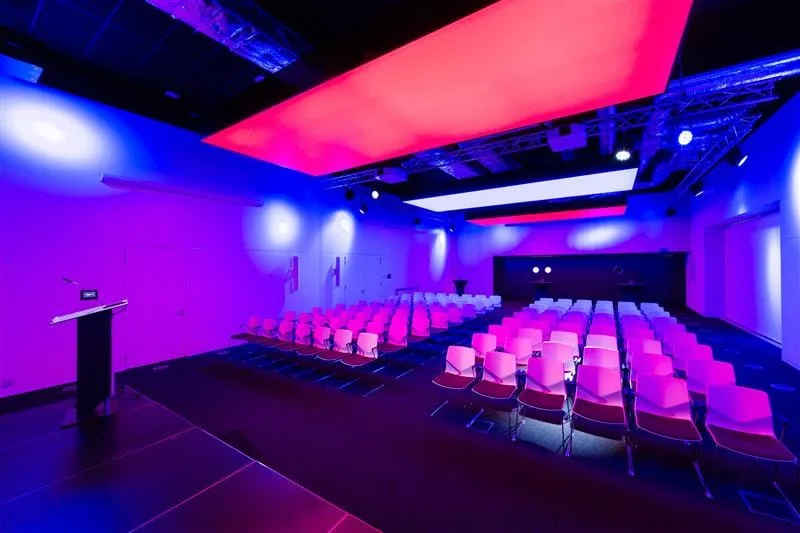
A memorable corporate event is not measured by the number of activities, speakers or entertainment options on its agenda. It is built around standout moments, meaningful conversations and an organisation that allows attendees to enjoy the experience to the full. How can you encourage engagement, communicate a lasting message and create a positive impression without overwhelming your guests? Discover eight practical ways to build a more selective, seamless and impactful event programme.
1. Define what attendees should remember
Before choosing activities or booking speakers, identify the outcome you want to achieve. A strategic seminar, a client conference and a staff party serve different objectives. Their agendas should therefore follow different approaches.
Set one main objective and two or three essential messages. For a product launch, this might mean communicating a tangible benefit and allowing guests to discover the solution. For an internal event, the objective might be to strengthen cooperation between departments and clarify the company’s priorities.
For each proposed session, ask yourself three questions:
- Does it directly support the event’s objective?
- Does it offer something that the other sessions do not?
- Will attendees gain an identifiable benefit from it?
If the answer is no, remove the session, combine it with another or share its content in advance. A selective agenda gives greater weight to the moments you choose to keep.
2. Build the agenda around one or two standout moments
Attendees will not necessarily remember every presentation throughout the day. However, a compelling demonstration, a particularly relevant testimonial or a meaningful group discussion can become a lasting point of reference.
Choose a signature moment for your event: a keynote that sheds light on a strategic issue, an immersive experience related to your business, an awards ceremony celebrating your teams or a workshop that leads to a concrete decision.
Focus your resources on this moment. Invest in speaker preparation, staging, audiovisual quality and audience participation rather than multiplying spectacular attractions. Plan a second standout moment if the format warrants it, such as a collective closing session after a morning of collaborative work.
In a Freeman survey reported by PCMA in 2024, 64% of respondents selected immersive experiences among the factors that most positively influenced their event experience. Immersion does not necessarily require expensive equipment: it can also result from a demonstration in which guests actively participate.
3. Alternate formats rather than adding more content
A succession of speeches, however excellent, always engages attendees in the same way. To maintain their interest, alternate sessions that invite them to listen, think, exchange ideas and take action.
Here are some formats that are easy to combine:
- A 20- to 30-minute introductory presentation to establish the context.
- A demonstration or case study to illustrate the key messages.
- An audience discussion allowing attendees to ask practical questions.
- A small-group workshop to apply the lessons to a professional situation.
These timings and formats are guidelines to adapt to the subject and audience. There is no need to switch activities every ten minutes: variety should support understanding, not create constant disruption.
In the same Freeman survey, demonstrations and hands-on activities were among the preferred learning formats of three-quarters of respondents. This is another reason to replace some presentations with a practical experience, rather than adding that experience to an already packed agenda.
4. Protect breaks and transitions
Breaks are not wasted time. They allow attendees to regain mental focus, continue a conversation, review their notes and prepare for the next session. Cancelling a break to make up for a delay often means passing the consequences of that delay on to your guests.
An exploratory study by Microsoft’s Human Factors Lab, conducted in 2021 with 14 people in video meetings, observed better management of stress markers when meetings were separated by ten-minute breaks. This small study cannot establish a universal break duration for in-person events, but it illustrates the value of allowing time for interruptions.
In your run of show, distinguish genuine breaks from logistical transitions. Moving to another room, visiting the cloakroom or queuing at the buffet does not necessarily constitute a moment of rest.
For a full-day event, for example, allow 15- to 20-minute breaks, a proper lunch break and a few minutes of buffer time between major sessions. Adapt these timings to the number of attendees and the distances they need to cover.
Want to build an agenda that gives your guests room to breathe? Contact the BluePoint Liège team to define a layout and schedule suited to your event.
5. Make networking a dedicated part of the event
At a business event, a useful conversation can be just as valuable as a conference session. Yet networking is often relegated to the final minutes of the agenda or concentrated in a reception where guests do not always know whom to approach.
To facilitate connections, start by identifying your attendees’ shared interests. Themed lunch tables, designated discussion areas or a few suggested conversation starters can be enough to initiate relevant exchanges.
According to the Freeman survey presented by PCMA, 52% of respondents selected opportunities to meet professionals facing similar challenges among the factors most conducive to a positive networking experience. This finding suggests prioritising the relevance of connections rather than their quantity.
Nevertheless, let attendees choose whom they want to talk to. Avoid systematically imposing rotations, games or introductory exercises. A well-designed coffee break, with standing tables, some seating and carefully managed sound levels, can encourage spontaneous conversations without adding another activity to the agenda.
6. Refine the attendee journey, from arrival to departure
The perceived quality of an event also depends on details that do not necessarily appear on the agenda: ease of access, speed of registration, clear signage, comfortable seating and sound quality.
Reduce unnecessary effort for your guests. Share access information before the event, clearly identify the different spaces and provide a welcome team that can answer questions. Also check that circulation routes, facilities and content meet accessibility needs.
Pay particular attention to catering. Choose a format that suits your schedule: a seated lunch for a genuine break, a buffet for flexible service or a walking dinner to extend conversations. Anticipate dietary requirements and allergies with your catering partner.
Finally, carry out a technical rehearsal and walk through the venue as a guest would. This will make it easier to identify friction points that your team, already familiar with the venue, might overlook.
7. Preserve flexibility on the day
A memorable agenda must be able to adapt to what actually happens. A particularly productive discussion may deserve a few extra minutes. Conversely, a session that no longer delivers value can be shortened.
Prepare two versions of your run of show: the standard schedule and a fallback version identifying sessions that can be shortened or removed. Clearly identify non-negotiable timings, particularly those related to catering, transport and speaker availability.
Assign time management to a clearly designated person. They should be able to communicate with speakers, the technical team and the venue manager, and decide which adjustments are authorised.
For example, if a keynote overruns by ten minutes, shorten an editorial transition or a secondary presentation rather than cancelling audience questions or the break. The run of show should protect what delivers the most value to attendees.
8. Extend the impact beyond the event
The final impression deserves just as much attention as the first. End with a clear summary, a collective commitment, an action to take or recognition of contributions. Avoid reducing the closing session to a series of thank-yous and administrative announcements.
In the following days, send useful, proportionate follow-up materials: key takeaways, promised resources, next steps and, where relevant, contact details that attendees have agreed to share.
Then measure what the event actually achieved. A short survey can ask which moment was most useful, which message was remembered and what action attendees intend to take. Complement it with an indicator linked to your objective: meetings secured, decisions made or lessons put into practice.
This feedback will help you identify which sessions to retain, develop further or remove at your next event.
Ultimately, a memorable corporate event is not the one that offers the most activities, but the one that gives meaning to every moment. By focusing your agenda on a few powerful experiences, protecting opportunities for conversation and refining the welcome experience, you create an environment in which attendees can genuinely engage. A simple agenda becomes an advantage: it frees up time, budget and attention for what really matters.
Ready to design an event that makes a lasting impression? Tell BluePoint Liège about your project and request a tailored proposal.
Would you like to discover all that BluePoint Liège has to offer?
