
Plenary, workshops and reception: how to coordinate a multi-format event
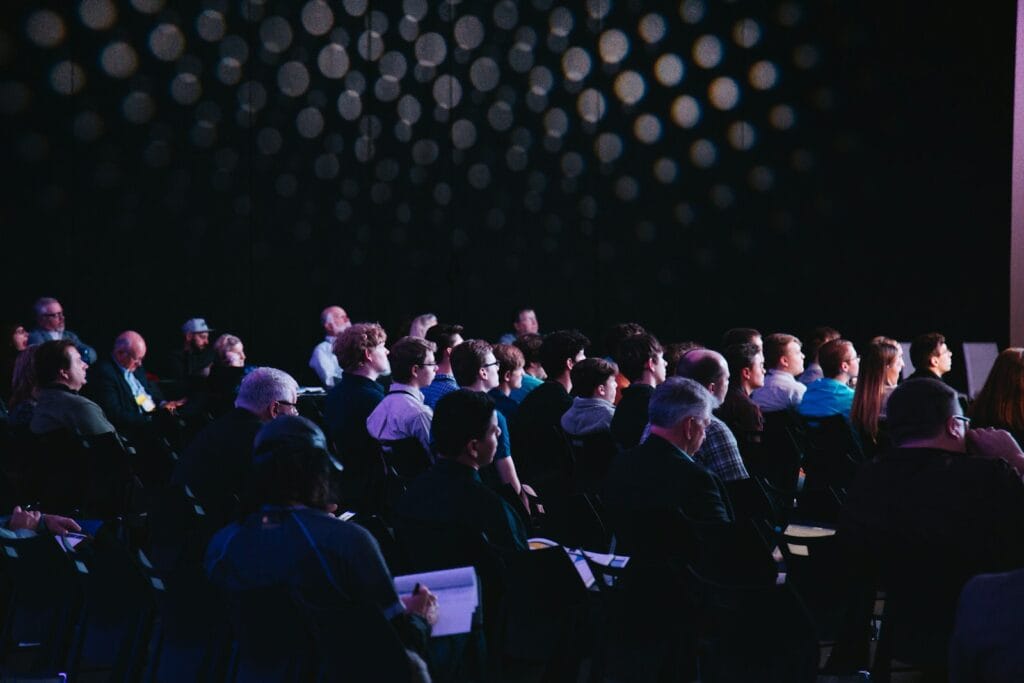
A plenary conference, participatory workshops and a reception to continue the conversation: combining several formats makes a corporate event more dynamic and engaging. But it also demands more careful planning. Room allocation, attendee movement, technical transitions, catering and timing all need to work together. Here is how to build a coherent programme and coordinate your event effectively, from the first arrival to the final guest.
1. Build your programme around a common thread
Before booking rooms or setting times, define the purpose of each highlight. A succession of activities does not necessarily create a coherent programme: every session should contribute something specific to the overall objective.
In a typical format, the three main moments serve complementary purposes:
- The plenary brings all participants together around a shared message: strategic presentation, keynote, conference or project launch.
- The workshops encourage interaction, collective reflection and a deeper understanding of the messages presented.
- The reception provides a more informal setting for conversations, building connections and continuing discussions.
Create links between these moments. Workshops can explore subjects introduced in the plenary in greater depth, while the reception can be an opportunity to present their conclusions.
A useful rule: express in one sentence what participants should take away or achieve after each session. If two activities pursue exactly the same objective, reconsider whether both are needed.
2. Create a realistic schedule, including transitions
A common mistake is simply adding up the duration of presentations without allowing enough time between them.
Yet leaving one room, finding a workshop, settling in, welcoming a new speaker or changing audiovisual equipment all take time.
In its conference-planning guide, the International Science Council recommends leaving 10 to 15 minutes between sessions and alternating more demanding formats with lighter activities.
Example schedule for a corporate event day
- 08:30–09:00: welcome, coffee and registration.
- 09:00–10:15: plenary conference and Q&A.
- 10:15–10:45: coffee break and directions to workshops.
- 10:45–12:00: first round of thematic workshops.
- 12:00–13:15: lunch and networking.
- 13:15–14:30: second round of workshops.
- 14:30–15:00: break and return to the plenary room.
- 15:00–15:45: collective wrap-up and conclusions.
- 15:45–16:15: transition and reception setup.
- 16:15–18:00: reception and networking.
This is an indicative schedule: adapt it to your objectives, the number of participants and your speakers’ constraints.
Also prepare a more detailed internal run sheet with technical setup times, instructions to suppliers and deadlines for each presentation.
3. Choose suitable spaces for each session
A plenary conference and a collaborative workshop do not have the same room layout requirements.
For the plenary, choose a space with good visibility, suitable sound equipment and effective presentation screens. Theatre-style seating generally helps focus attention on speakers.
For workshops, choose rooms that encourage discussion. Depending on the activity, U-shaped, classroom or cluster layouts may be more appropriate.
The reception needs a space where people can move freely, with a logical arrangement of buffets, drinks stations and conversation areas.
Plan movements between spaces
Proximity between rooms can make a real difference, especially for an event involving several hundred people.
Check in particular:
- The distance between the plenary and workshop rooms.
- The width and accessibility of circulation routes.
- Whether some rooms can remain set up throughout the day.
- The location of toilets, cloakrooms and catering areas.
- Whether attendee and supplier flows need to be separated.
At BluePoint Liège, event rooms, meeting spaces and the Grand Lobby support different configurations depending on your programme. The team can help you identify the right spaces for each session.
Discuss your event layout with BluePoint Liège.
4. Coordinate technical transitions before event day
Moving from a conference to workshops and then a reception often involves several audiovisual setups.
The plenary may require microphones, sound reinforcement, a screen and presentation materials. Workshops may need lighter equipment distributed across multiple rooms. The reception may call for a different sound and lighting atmosphere.
To avoid last-minute surprises:
- Collect presentations centrally and check their file formats.
- Test microphones, videos and connections before attendees arrive.
- Prepare a technical setup for each space.
- Appoint one contact person to oversee audiovisual changes.
- Plan a backup for critical files and equipment.
Watch out for last-minute changes: moving equipment during a break does not necessarily mean the next space will be ready immediately.
Where possible, prepare workshop rooms during the plenary and the reception space during the final sessions. This minimises disruption for guests.
5. Manage attendee movement as a flow
A multi-format event also depends on how easily guests move from one activity to the next.
Clear signage, simple instructions and advance allocation of participants prevent unnecessary bottlenecks.
If workshops run simultaneously, share their programme in advance. For sessions with limited capacity, arrange advance registration or an allocation system.
Avoid scheduling two particularly popular workshops at the same time when they target the same audience.
Make every transition easier
A few simple measures can make a difference:
- Display the overall schedule at reception.
- Identify rooms by name and number.
- Send workshop assignments before the event.
- Position a staff member at major junctions to guide attendees.
- Clearly announce the time and location of upcoming activities.
For multilingual events, adapt signage and announcements to the participants’ languages.
6. Synchronise catering with the programme
Catering should not be treated as a service independent of the event schedule.
An overly short coffee break can cause queues. A lunch that runs late delays the next workshops. And a reception where the buffets are not ready when guests arrive immediately disrupts the experience.
Agree precise setup, service and clearing times with your catering partner.
Also consider the location of refreshment points. Multiple drink or food stations can help keep people moving at events with large audiences.
Finally, coordinate reception preparations with the last presentations. Ideally, use a separate space that can be prepared without disturbing attendees.
7. Appoint a coordinator and clarify responsibilities
Even with a perfectly prepared programme, unexpected situations may arise: a late speaker, a session running over time or an unforeseen technical change.
To react quickly, everyone involved in the organisation must know exactly what they need to do and when.
As a minimum, identify:
- An overall coordinator, responsible for the schedule and decisions.
- A technical manager, responsible for audiovisual equipment and layout changes.
- A speaker liaison, responsible for presenters and facilitators.
- A reception lead, responsible for registration and directions.
- A catering manager, responsible for service schedules and coordination.
Appointing a coordinator does not mean they must personally manage every detail. Their role is to maintain an overview and make good decisions quickly.
At BluePoint Liège, on-site support, audiovisual facilities and catering services can help simplify this coordination.
Discover BluePoint Liège’s services and event spaces.
8. Rehearse the entire attendee journey
The day before or a few hours before the event, walk through the venue following the actual route an attendee will take.
Start at registration, enter the plenary room, proceed to the workshop rooms and finish in the reception space.
At every step, check critical details: signage, access, equipment, capacity, comfort and available information.
The Royal Society of Chemistry also recommends regular accessibility breaks, for example 5 to 10 minutes every 60 minutes or 15 minutes every 90 minutes, depending on the structure of the programme.
A smooth attendee journey therefore needs to account not only for distances but also for the rest and accessibility requirements of all guests.
Finally, hold a joint briefing with reception staff, technicians, catering and room leads. Everyone should work from the same version of the event run sheet.
Conclusion: coordinate the highlights to create a coherent event
Combining a plenary, workshops and a reception creates more opportunities to learn, participate and build connections. But the success of this format depends above all on coordination between the sessions.
A realistic schedule, well-chosen spaces, planned transitions and clearly allocated responsibilities help reduce downtime while giving participants a pleasant experience.
Planning a corporate event built around several highlights? BluePoint Liège offers flexible spaces and integrated services to make your programme easier to organise.
Contact our team to plan your next event at BluePoint Liège.
Would you like to discover all that BluePoint Liège has to offer?
